Dog Houses: Shelter Safety and Archived Product Reviews
What makes a good dog house? A dog house can provide an optional sheltered resting place in a properly supervised outdoor area, but it cannot replace safe indoor care, fresh water, exercise, companionship or protection from dangerous temperatures. The right design depends on the dog’s size, climate, outdoor routine and ability to enter or leave comfortably. This guide explains selection criteria and compares common designs without claiming that an outdoor shelter alone keeps a dog safe.
Editorial disclosure: The original page contained an older product roundup. The named models below are historical examples, not current hands-on tests or verified 2026 recommendations. Product specifications and availability must be confirmed with manufacturers before purchasing. Some product links are affiliate links.
First decide whether an outdoor dog house is appropriate
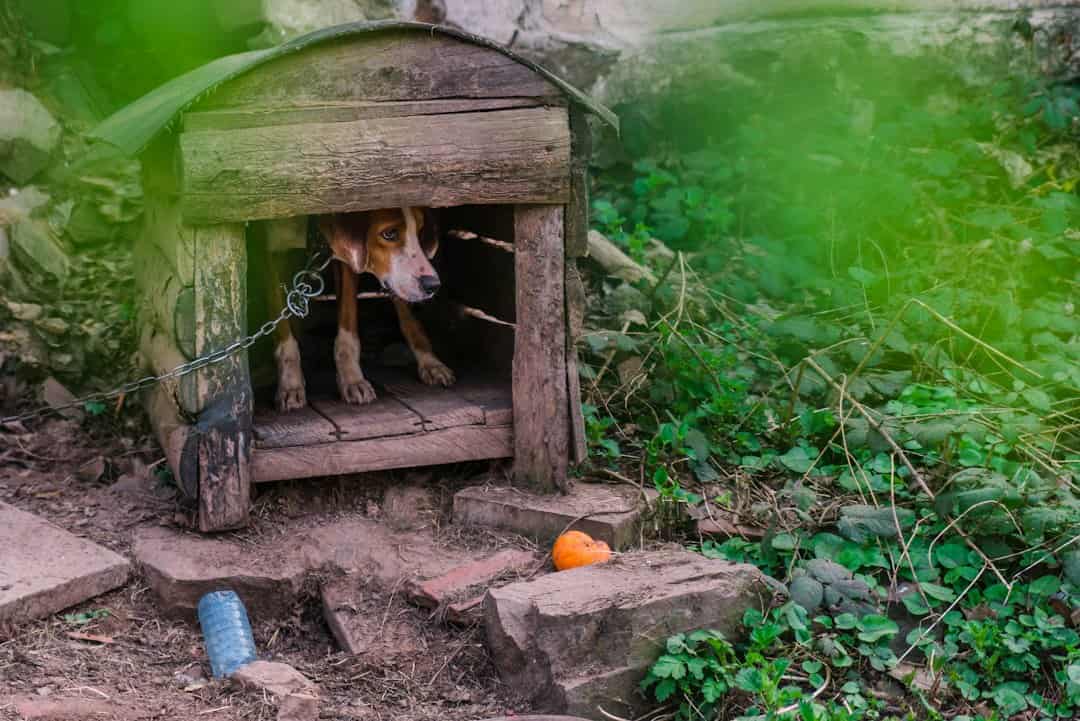
Illustrative photograph: Atanas Dzhingarov / Unsplash; not a claim of product testing or veterinary treatment.
A dog that spends brief supervised time in the yard may enjoy an optional dry, shaded retreat. A dog that lives primarily indoors may not need a separate outdoor house at all. Puppies, senior dogs, short-coated dogs and pets with medical conditions can be especially vulnerable to heat and cold. The BC SPCA recommends protecting vulnerable pets from dangerous temperatures and providing cool indoor spaces during hot weather. Do not use a dog house to justify leaving an animal outside through a storm, heat wave or severe cold.
Measure the dog and the space, not just a product label
A house should let the dog enter and exit without twisting awkwardly, stand comfortably, turn around and rest naturally. A shelter that is far too large may be harder to keep comfortable in cool weather; one that is too cramped can restrict movement and airflow. Compare the actual internal doorway and floor dimensions with your own dog, accounting for any bedding or insulation. Product labels such as small, medium and large are not standardized. Check the dog’s mobility and whether it hesitates to step over an elevated threshold.
Materials: plastic, wood and insulated panels
- Plastic or molded-resin shelters: Often simpler to hose off, with fewer untreated wood surfaces; ventilation, thickness and UV resistance still vary greatly.
- Wooden houses: Can offer a sturdy structure and adaptable design, but need attention to joints, sealant safety, moisture, pests and cleaning.
- Insulated-panel models: May reduce temperature fluctuations in some conditions, but insulation cannot make an exposed outdoor house safe during temperature extremes.
- Fabric and pop-up shelters: Useful only where weather exposure and chewing risk are appropriately controlled; they are not the equivalent of weatherproof, predator-safe housing.
Ventilation and heat: why shade matters more than marketing
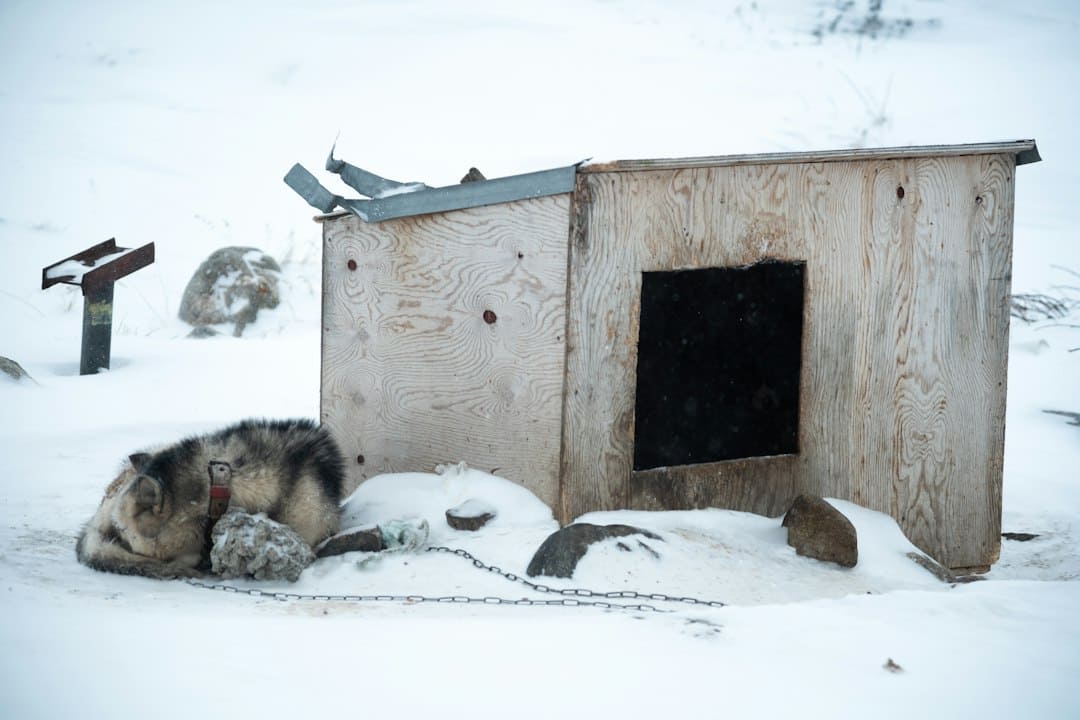
Illustrative photograph: Rasmus K / Unsplash; not a claim of product testing or veterinary treatment.
An enclosed shelter can accumulate heat, especially in direct sunlight. Look for suitable cross-ventilation and a site shaded during the warmest hours; verify that the dog can freely leave for a cooler area and water. Avoid sealed designs that trap heat even if they are marketed as insulated. The BC SPCA’s warm-weather guidance stresses cool resting areas, water and indoor safety. A dog house should not be treated like a climate-controlled building just because a product description says weatherproof.
Rain, dampness, drainage and cleaning
Check how the roof sheds water, whether the structure sits above pooling ground, and whether moisture can escape from inside. A slightly raised, stable floor can help keep bedding away from wet soil, but needs to remain accessible to the dog. Inspect seams and door openings after rain. Removable roofs, panels or floors make cleaning and inspection easier. Bedding should be washable and kept dry; damp blankets can worsen comfort and hygiene. Watch for signs of mold or pests, and replace damaged materials rather than masking odors.
What dog owners should compare before buying
| Feature | What to verify | Why it matters |
|---|---|---|
| Interior room | Door opening, usable floor and turning space | Comfort, mobility and safe access |
| Ventilation | Air openings and shade location | Helps avoid trapped heat and stale air |
| Weather protection | Roof, drainage and seams | Helps keep resting surfaces dry |
| Cleaning access | Removable roof or panels | Supports hygiene and inspection |
| Materials | Surface finish, chew resistance and fasteners | Reduces injury and maintenance issues |
| Placement | Level ground, shade, visibility and supervised access | Can matter more than the house itself |
Historical product models: examples, not an updated best-of ranking
An earlier version of this page featured five commercially sold models. Their inclusion here preserves the context of the original review and its product links, but is not an endorsement based on current availability, owner testing or updated manufacturer specifications. Before considering any of them, check actual dimensions, installation instructions, material construction, return policies and current user feedback.
- Petmate Indigo: An igloo-style design previously listed on this site. Confirm entrance size, ventilation, cleaning access and the exact current model.
- Pet Squeak Arf Frame: A pitched-roof style previously compared. Inspect roofing, waterproofing and any maintenance required for wood surfaces.
- ASL Solutions Dog Palace: An insulated-panel style previously discussed. Verify manufacturer temperature guidance and never assume insulation makes unsupervised outdoor confinement safe.
- Petsfit wooden dog house: A wood-house example that should be evaluated for interior dimensions, ventilation, cleaning and exterior maintenance.
- Petmate Barnhome III: A molded-house example previously included; verify current product dimensions and material details.
Questions that matter more than a star rating
Can your own dog enter, turn and leave freely? Can the structure be cleaned thoroughly? Is it stable on the intended ground? Does the manufacturer state how it should be assembled, secured and maintained? Is the location shaded in summer, sheltered from rain and protected from pooling water? A good return policy matters because the actual fit and quality may differ from photos. Do not equate a high price with a safe temperature range or proof of veterinary approval.
Puppies, older dogs and dogs with special needs
A puppy may chew exposed hardware or struggle with a high doorway. An older dog may need a lower threshold, secure traction and a warm indoor space rather than a separate outdoor structure. Short-nosed breeds and dogs with respiratory concerns are particularly vulnerable during hot weather. If your dog has arthritis, mobility problems, anxiety or a medical condition, ask your veterinarian whether an outdoor house is appropriate at all. Our positive crate-training guide addresses a different indoor resting arrangement and should not be used to justify prolonged confinement.
Dog house safety and maintenance checklist
- Confirm that the dog can leave and reach fresh water and a safe, shaded or indoor area.
- Inspect the shelter’s roof, seams, flooring and fasteners after weather changes.
- Clean and dry the interior regularly; replace damp or deteriorated bedding.
- Check for sharp edges, loose hardware, hazardous coatings and damaged plastic.
- Reassess fit as a puppy grows or an older dog’s mobility changes.
- Bring the dog indoors when heat, cold, storms, smoke or other conditions become unsafe.
Frequently asked questions
Does every dog need a dog house? No. Many dogs have safe, comfortable indoor resting spaces and spend outdoor time with their owners. A dog house is optional.
Are insulated dog houses safe in winter? Insulation alone does not make a house a safe substitute for indoor care. Weather, the dog’s age and health, and access to a temperature-controlled space all matter.
Can a dog house keep a dog cool in summer? It may shade part of the yard, but an enclosed shelter may also trap heat. A cooler indoor environment and water are more dependable protections in hot conditions.
Is a plastic dog house better than wood? Neither material is automatically superior. Fit, ventilation, durability, weather resistance, cleaning, climate and maintenance determine the practical choice.
Bottom line
Choose a dog house for a specific need, not because a product page says every dog requires one. Start with welfare, climate, fit and a safe yard setup; then compare practical construction details. Treat the archived product links as examples, verify any current purchase independently, and never substitute a shelter for indoor safety during extreme weather. For related reading, see dog hydration and crate ventilation and covering.