

Shih Tzu puppy cut vs. teddy bear cut: which should you ask for? The main difference is the face. A puppy cut is usually a practical, fairly even trim, while a teddy bear cut keeps a fuller, rounded face with a plush expression. Neither name has a universally fixed length, so a photo and a clear conversation with your groomer matter more than the label.
Both styles can be attractive and comfortable when maintained properly. The best choice depends on your Shih Tzu’s coat texture, skin and eye health, how much brushing you can realistically do, and the finish you prefer—not simply what is trending on social media.
Puppy Cut vs. Teddy Bear Cut: Quick Comparison
| Feature | Puppy cut | Teddy bear cut |
|---|---|---|
| Overall look | Neat, relatively even trim | Shorter body with a fuller, rounded face |
| Face and ears | Typically tidied to a practical shape | Rounded cheeks and muzzle; ears may look softer and fuller |
| At-home brushing | Still needed; usually easier with a shorter finish | Particular attention around the face, ears and collar |
| Grooming appointment | Often around every 4–8 weeks, depending on growth and coat | Often around every 4–8 weeks, with facial touch-ups as needed |
| Good fit for | Owners wanting a practical, easy-to-comb style | Owners happy to maintain a plush face between appointments |
A grooming-style survey published in 2026 found strong interest in teddy bear and puppy cuts in the UK, but it does not prove that either style is the most popular everywhere. More importantly, the American Shih Tzu Club emphasizes regular brushing and preventing mats, regardless of the haircut you choose.
What Is a Shih Tzu Puppy Cut?
A puppy cut usually means reducing the coat to a manageable, fairly consistent length across the body and legs while tidying the face, feet and hygiene areas. The goal is a soft, neat everyday finish—not necessarily a shaved coat. Some groomers leave the ears and tail a little longer, and others interpret “puppy cut” much shorter.
A shorter puppy cut often suits dogs who enjoy walks, get dirty easily, or resist long brushing sessions. However, it does not eliminate tangles, ear care, tooth brushing or grooming visits. The Shih Tzu’s dense coat can still knot close to the skin.
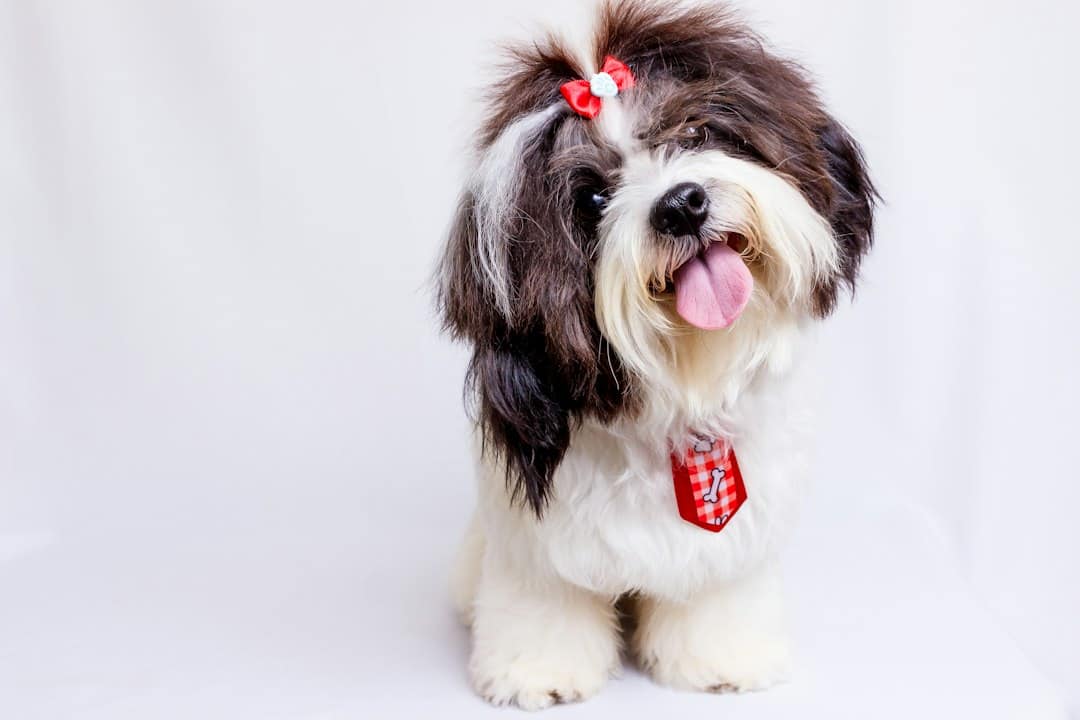
Illustrative grooming inspiration. The photograph does not define a standardized puppy cut. Photo: Edson Torres / Unsplash.
What to Ask for at the Salon
- “Please keep the body short enough for easy combing, but not shaved to the skin unless medically or matting-related necessary.”
- “Keep the hair around the eyes clear without irritating the skin.”
- “Please tell me what length you recommend for this particular coat.”
- “I would like tidy paws and hygiene areas, with a natural-looking tail.”
What Is a Shih Tzu Teddy Bear Cut?
The teddy bear style usually has a similarly manageable body with soft, rounded cheeks and muzzle. The face is the focal point. The groomer may shape the ears so they blend into the round outline, although a Shih Tzu’s natural face and coat determine what is realistic.
This can be a lovely look for a dog whose owner enjoys daily facial cleaning and gentle combing. The trade-off is that slightly longer muzzle, cheek and ear hair may collect moisture and food or develop knots. A rounded face should never obstruct vision or press hair against the eyes.
A Fuller Face Does Not Mean Less Eye Care
Shih Tzus have prominent eyes and may be vulnerable to irritation when hair rubs against them. VCA Canada’s Shih Tzu care guide recommends watching for stray hairs around the eyes and checking the ears regularly. If you notice squinting, redness, discharge or obvious discomfort, arrange a veterinary assessment instead of trying to trim close to the eyeball at home.
What About a Longer, Traditional Shih Tzu Coat?
A long flowing coat can look striking but typically requires substantially more brushing and drying. It is a separate commitment from either short pet style. The American Shih Tzu Club notes that many dogs go through a coat change around 10–12 months, when tangles can become especially challenging.
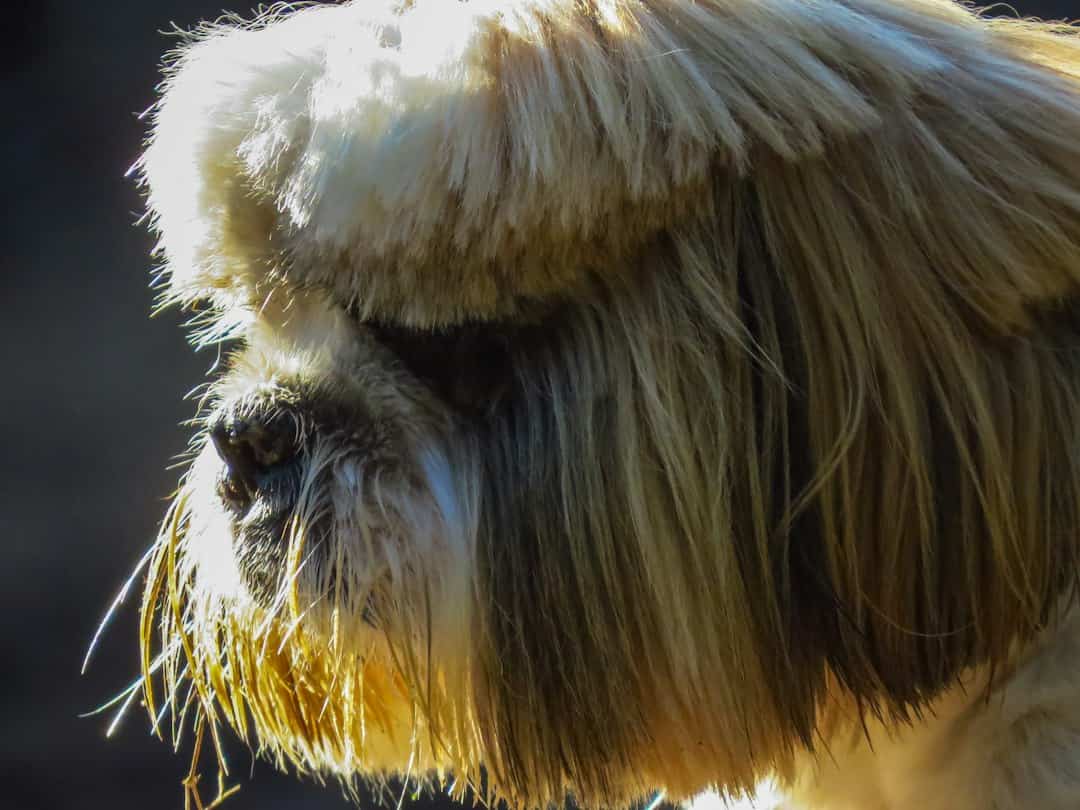
Long-coat reference image; actual Shih Tzu coats and trims vary. Photo: Dieny Portinanni / Unsplash.
For owners comparing appearance with maintenance, a moderate-length puppy cut plus a softly rounded face can be a practical middle ground. The stylist can adapt the trim to the dog rather than treating a named style as a rigid template.
How Often Does a Shih Tzu Need Grooming?
Many pet Shih Tzus return for professional grooming roughly every four to eight weeks, but this is a planning range, not a rule. Faster coat growth, the chosen haircut, matting, the dog’s comfort and the groomer’s assessment may mean shorter intervals. Ask the salon for a realistic plan after the first appointment.
A shorter coat makes brushing quicker, not optional. VCA Canada advises brushing and combing Shih Tzus every other day to help prevent mats, while the breed club’s companion-grooming guidance explains that dense or soft coats can require more attention. Use a dog-appropriate brush and a comb that reaches through the coat gently; never yank at tangles.
Simple Between-Appointment Routine
- Daily: Look around the eyes and mouth for trapped hair, moisture or irritation; clean gently as advised by your veterinarian or groomer.
- Every day or two: Comb the coat carefully, particularly behind the ears, under the collar, armpits and legs. Increase frequency if knots appear.
- Weekly: Inspect ears, nails, skin and paws; include regular dental care.
- As needed: Bathe with an appropriate dog shampoo and dry thoroughly. Learn more in our Shih Tzu bathing guide.
If your dog already has tight mats, avoid cutting them out with household scissors or bathing a badly matted coat first. Skin can be caught beneath mats; ask a professional groomer or veterinarian to choose the safest approach.
Does a Shorter Haircut Keep a Shih Tzu Cool?
A shorter, well-maintained coat may be easier to keep clean and dry, but it does not remove the risk of overheating. Shih Tzus are a short-nosed (brachycephalic) breed, so heat, excitement and strenuous activity warrant extra caution. Keep exercise gentle in warm conditions, provide shade and fresh water, and never leave a dog in a parked vehicle.
PetMD’s veterinarian-reviewed Shih Tzu breed guide describes the breed’s coat and facial anatomy. Ask your veterinarian if your dog breathes noisily, struggles in heat or shows poor exercise tolerance; choosing a haircut is not treatment for breathing problems.
Which Cut Should You Choose?
- Choose a puppy cut if you want a simpler, more uniform shape and less coat to detangle each week.
- Choose a teddy bear cut if you prefer a plush rounded face and can keep that longer facial hair clean and combed.
- Choose a moderate hybrid if you like the teddy bear face but want the body and legs tidied shorter for everyday life.
- Choose a longer coat only if you can commit to frequent thorough grooming and your dog tolerates it comfortably.
A “hypoallergenic haircut” is not a real solution to dog allergies. No breed is completely allergen-free; see our related guide, Are Maltese Dogs Hypoallergenic?, for what low-shedding claims do and do not mean.
What to Tell Your Groomer: A Practical Checklist
Save one or two photos of the specific finish you like and discuss these points before the appointment:
- The desired body length and whether you want the legs slightly fuller.
- A round or practical face, with clear eye corners and a clean muzzle.
- How the ears and tail should blend into the overall shape.
- Any mats, sensitive skin, eye issues, breathing concerns or previous negative grooming experiences.
- The brushing routine you can maintain and when the next appointment should be booked.
If your dog is new to professional grooming, prioritize a calm first visit over an elaborate shape. Short, reward-based handling practice can help: lightly touch the paws, lift the ears gently, reward cooperation and stop before the puppy becomes overwhelmed. Our guide to reward-based clicker training for puppies explains how to mark and reward calm behaviour.
Frequently Asked Questions
Is a Shih Tzu puppy cut the same as a teddy bear cut?
Not exactly. A puppy cut usually describes an overall short, fairly even trim. A teddy bear cut usually means a rounder, fuller facial style. Many salons overlap the terms, so show a reference photo and agree on a length.
Can an adult Shih Tzu have a puppy cut?
Yes. “Puppy cut” refers to a style rather than the dog’s age. Adult and senior Shih Tzus can wear a practical short coat if it suits their comfort and skin health.
How often should I brush a Shih Tzu with a teddy bear cut?
Check the face and problem areas daily and comb thoroughly often enough to prevent knots. Coat texture and length matter; many dogs need brushing at least every other day, with additional facial care.
Does a teddy bear cut make a Shih Tzu hypoallergenic?
No. Hair length does not eliminate dog allergens. People with pet allergies may react to proteins from dander, saliva and urine, regardless of the haircut.
Can I trim my Shih Tzu’s face myself?
Avoid scissors or clippers close to the eyes, especially if your dog moves unexpectedly. Ask a qualified groomer for a safe plan, and consult a veterinarian if hair appears to be irritating the eyes.
How much does either Shih Tzu haircut cost?
Pricing depends on your city, coat condition, dog size, handling needs and the salon’s service package. Request a local quote for the exact haircut and ask whether bathing, nail care and detangling are included rather than relying on a generic advertised price.
The Bottom Line
The puppy cut is usually the more practical starting point, while the teddy bear cut offers a fuller, rounded face for owners willing to maintain it. The right trim is the one your dog can wear comfortably and you can care for consistently. Bring a reference photo, keep hair out of the eyes and treat coat condition—not the trend name—as the priority.
Sources and Editorial Notes
Research checked October 25, 2026. This article compares grooming terminology and care guidance; it is not a firsthand grooming test or a substitute for veterinary advice. Sources: American Shih Tzu Club; VCA Canada; PetMD (veterinarian-reviewed); 2026 UK grooming trend report. Trend figures describe the report’s own UK sample, not global preferences.